
Sorites Lithographic, or Help, I Don't Know How to Read This Book, or How Many Prints Make a Heap, or One Thing Becomes Another, or Balding.
312 impressions from a limestone. After each impression, a mark is added to the stone.
4.25" x 5.5" double-sided, on unidentified kozo paper.
Printed over three sessions, July 9-11, 2026.
Displayed in the order in which they were made at a rate of 10 prints per second.
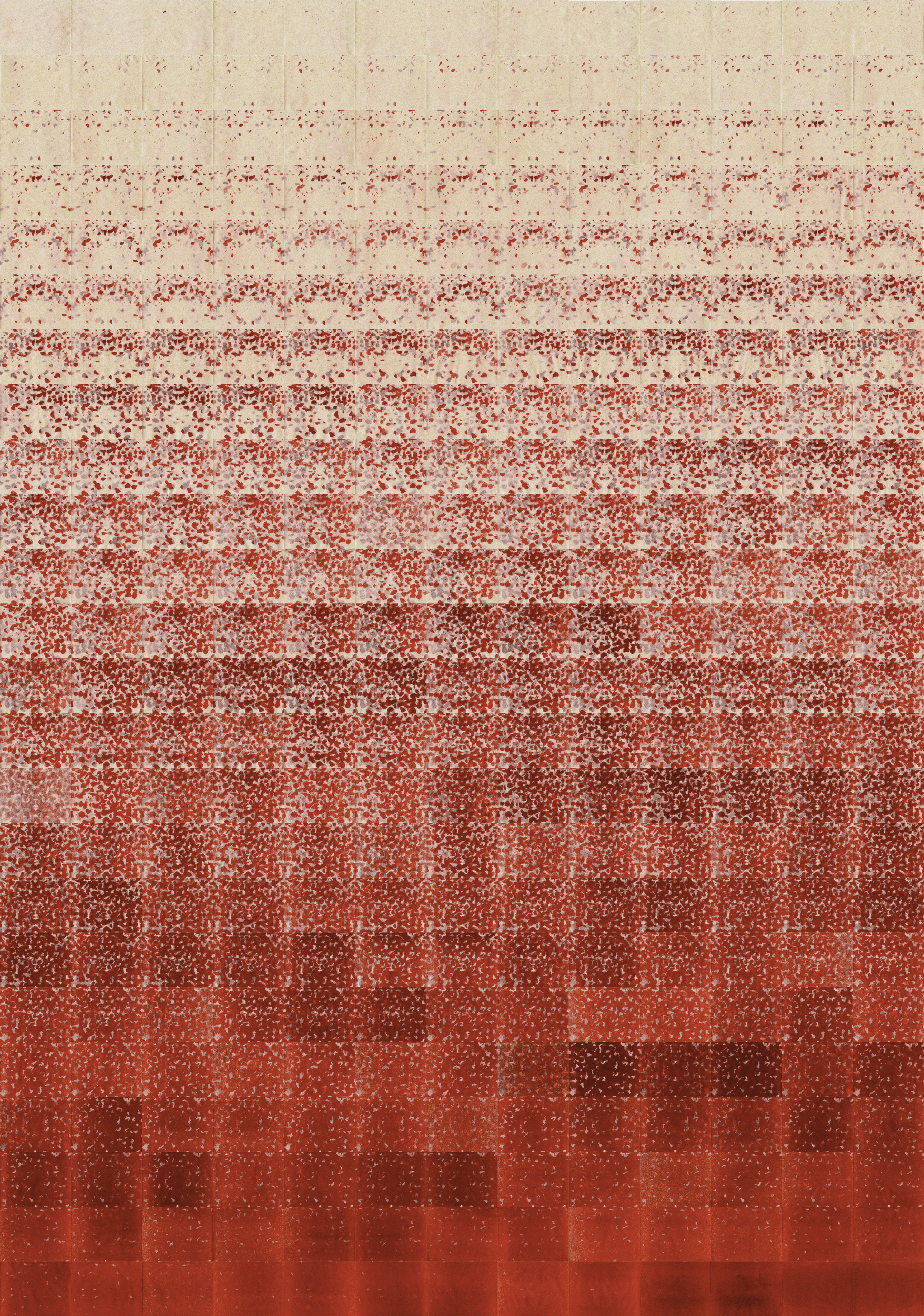
This body of work is heavily inspired by Timothy Morton's application of the Sorites Paradox to the issues of climate crisis and personal responibility. The following is from his essay "And You May Find Yourself Living in an Age of Mass Extinction Published in All Art is Ecological, Timothy Morton. 2018 :
"When does a collection of things become a heap? If you take a single rock away from a heap of rocks, does that mean it is no longer a heap?
What if you take ten rocks away? Where does the heap start, and where does it end? This quandary suggests a great deal of vagueness, and some philosophers don't like vagueness, so they don't believe heaps exist at all.
The trouble is, ecological things such as populations (for example human ones) and ecosystems are very well described as heaps of things. So we had better allow heaps to exist if we're going to be ecological, because addressing global warming and mass extinction can only be done at a massive, collective scale.
[...]One car ignition firing doesn't cause global warming. Two? No. Three? No. You can work your way all the way to one billion and the same logic will hold. So there is no global warm-ing. Or - drum roll - your logic sucks. How does it suck? It sucks by having no time for things that are in between true and false, black and white. Ecological beings such as lifeforms and global warming require modal and paraconsistent logics. These logics allow for some degree of ambiguity and flexibility. Sentences can be kind of true, slightly false, almost right."
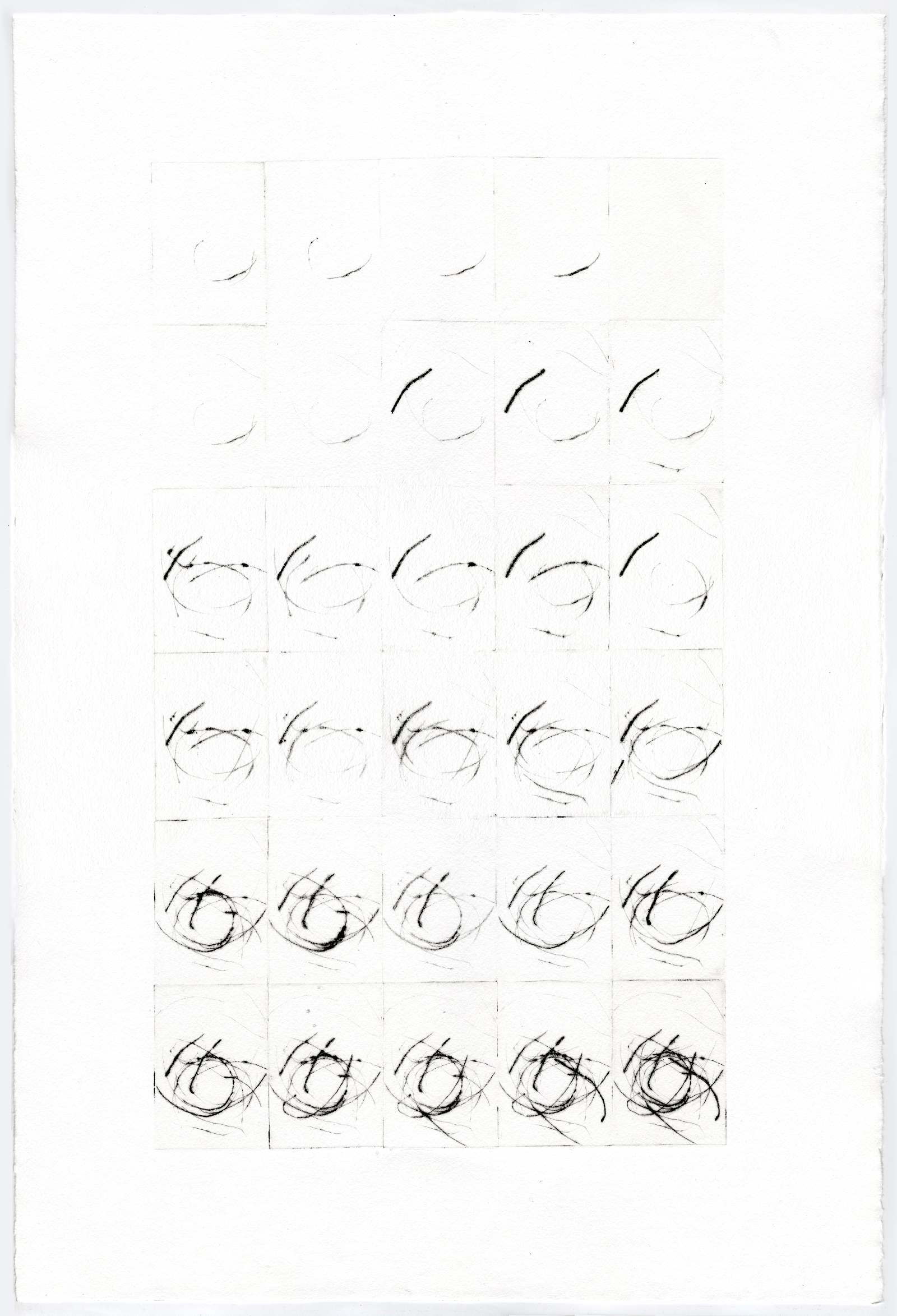
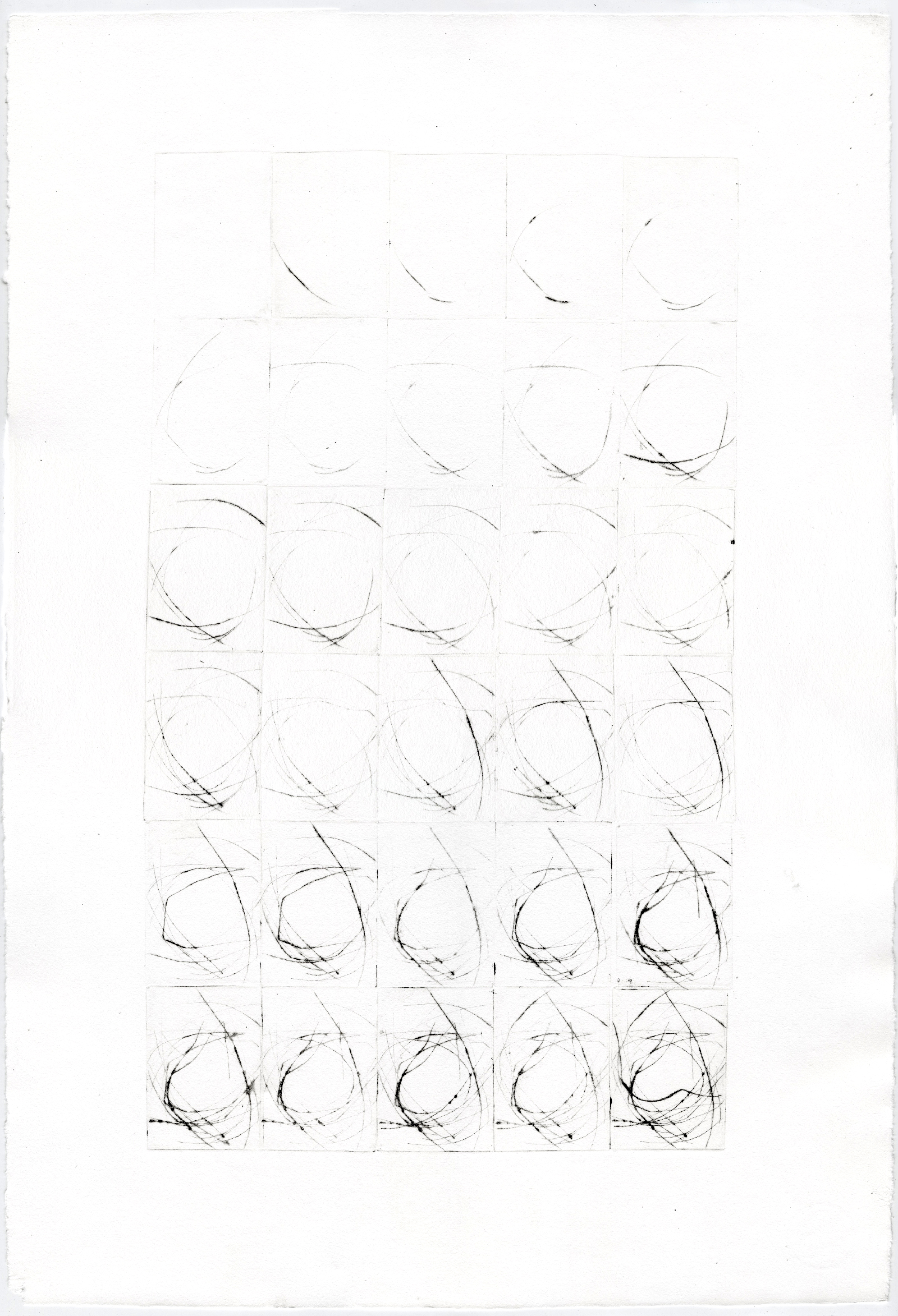
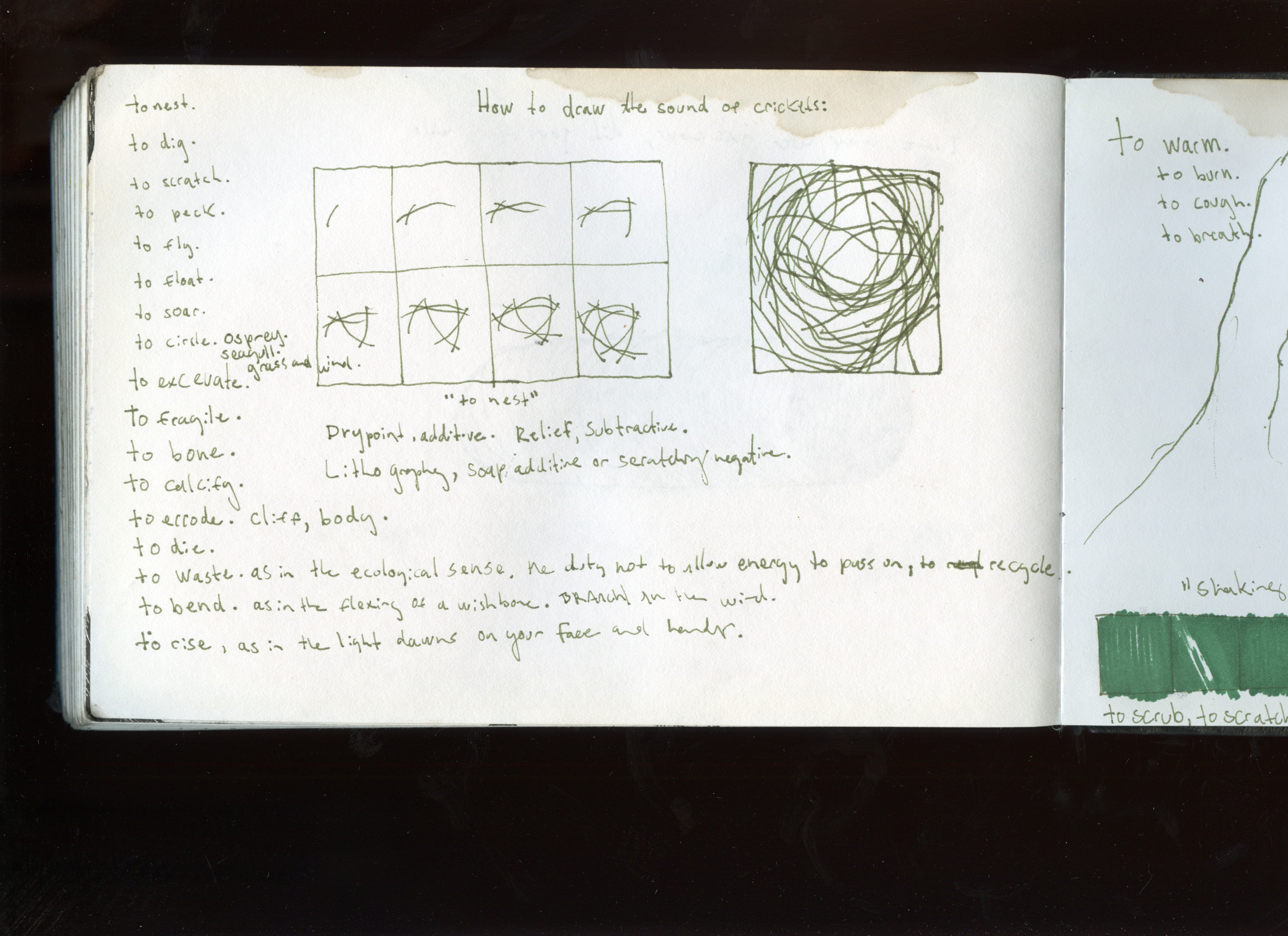
Scratching, Nesting—Testing
60 Frame drypoint animation from two sides of the same copper plate. Two iterations of the same model, print the plate, scratch a line, print the plate.
Plate size : 2" x 2.875", printed in a grid of 5 by 6 on 15" x 22" cotton rag, 2026.
This website has been in development since 2014 — when I was 14— it has never, and may never reach a state of completion.
It is crudely coded in HTML, CSS, and chunks of javascript which I do not understand.
The best place to view my work is in person, I hope you'll stay in touch.
Oscar Jarsky
Copyright Oscar Jarsky © 2014-2026.